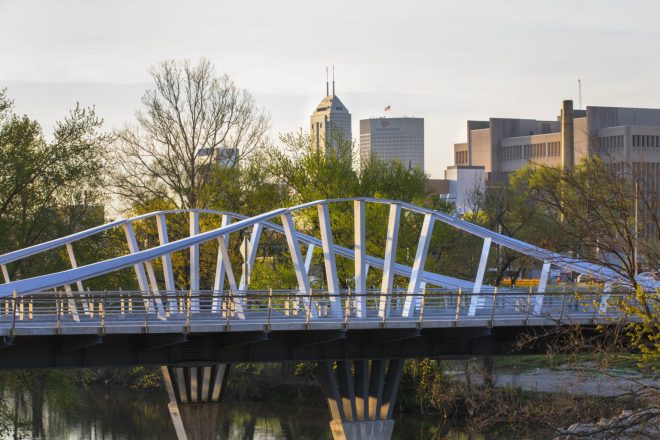
The district welcomed its first tenants in early 2021 at a moment when the world seemed to be moving in the opposite direction. Offices were empty. People were working remotely. Yet 16 Tech was built on an established and simple premise: density and proximity are key ingredients for interactions that lead to faster innovation and greater entrepreneurial outcomes for our community.
And now 16 Tech has real momentum: it is a growing district with more than 300 companies employing roughly 1,200 people, onsite retail and residential, two life sciences projects under construction and a development pipeline that includes eight shovel-ready parcels.
If central Indiana wants to stay competitive on a global scale, we must move fast, and intentionally, to attract talent, support entrepreneurs, and grow innovation-based industries. The lessons learned over the past five years at 16 Tech offer insight into how to accelerate that path, and how together we can continue building an ecosystem that competes with the best in the world.
Programming is how districts turn proximity into opportunity
Innovation districts are often described as places where serendipitous collisions spark new ideas. Those moments matter, but they rarely happen by accident alone.
To turn proximity into competitive advantage, districts must have intentional ways to make meaningful interaction more likely and help people navigate the opportunities around them. At 16 Tech, programs are a key part of that strategy. They create awareness of the district, exposure to entrepreneurship, and clear pathways to specialized resources including more than a dozen incubator and accelerator programs that operate in 16 Tech, covering everything from main street business to biotech and industry 4.0.
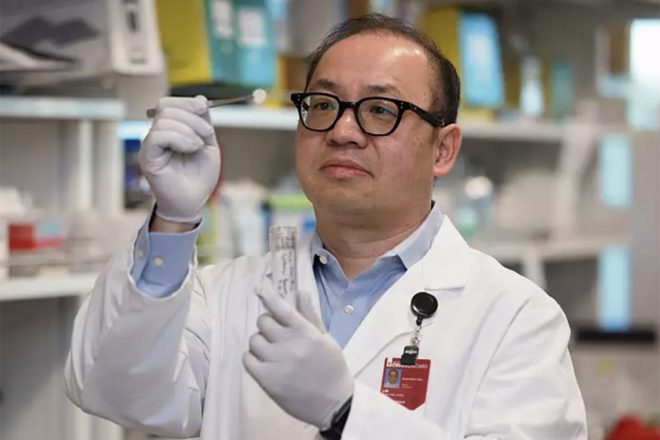
By ensuring resources are visible and connected, 16 Tech is helping founders move more easily from idea to prototype to scale within the district itself. The results can be seen in ground-breaking innovations happening every day in 16 Tech like new treatments for Alzheimer’s, cancers and obesity; products that improve the patient experience; virtual reality that improves health and well-being; sustainable, customized footwear; and the launch of native AI companies that will change how we work.
The same principle applies to talent. 16 Tech’s experiential learning programs and efforts to support district employers host interns and work-based learning experiences are creating clearer entry points for students, while making it easier for employers to connect with emerging talent. Talent pipelines are not separate from ecosystem building—they are one of the ways a district intentionally engineers opportunity.
These efforts reinforce a simple but powerful insight: innovation accelerates when programs, partners and talent are purposefully connected.
Districts need a welcoming and accessible front door
Innovation districts have the potential to serve as a gateway to a region’s innovation ecosystem, but only if they themselves have clear, welcoming and accessible entry points.
At 16 Tech, the HqO Innovation Hub serves as our front door and the heartbeat of the district. Once the former headquarters of the Indianapolis Water Company, HqO creates a clear place for community members, students, entrepreneurs, and innovators to connect over local food offerings in the AMP food hall and in creative spaces that support startups and small businesses. Over the past five years, the stage in the AMP has hosted everything from a pre-school graduation to pitch competitions and local DJs and markets to leading industry speakers discussing AI, precision medicine and smart manufacturing.
HqO gives 16 Tech a center of gravity. It is where many people first encounter the Indianapolis innovation ecosystem and where relationships begin. It makes the district feel welcoming and accessible— essential ingredients for any place that hopes to bring together people from different industries, institutions, and communities.
The mixed-use environment is a deliberate part of our strategy. 16 Tech is more than labs, offices, and maker studios. Having apartments, local retail and restaurants, and trail and park connectivity adds life and dimension.
To be a spot where people do their best work, an innovation district has to offer more than places to work.
Districts require long-term stewardship
The final lesson from 16 Tech’s first five years is that innovation districts are not built overnight.
Even the most recognized places like Silicon Valley and Kendall Square were developed over decades. Innovation districts require sustained commitment, collaboration, and governance that can hold the long view. That is one reason the 16 Tech Community Corporation was established—to steward the district as shared civic infrastructure for our City.
Five years in, 16 Tech has established meaningful critical mass. Human health innovation is one of our strongest examples. Assets such as the Indiana Biosciences Research Institute, the IU Launch Accelerator for Biosciences, Heartland BioWorks, and a growing startup presence are creating a stronger connection among discovery, commercialization, talent, and training. Critical mass attracts more activity, more companies, and more investment – and more is on the way.
That’s not just good for 16 Tech; it’s good for Indiana.
The lessons emerging from 16 Tech extend beyond the district itself. They offer practical insight into how Indiana can strengthen its broader innovation ecosystem: by designing for connection, creating clear entry points, and investing in the places where ideas, talent, and industry come together.
Originally posted on Inside Indiana Business on April 2.